The Lighthouse of Alexandria: The Secrets of the 7th Wonder of the Ancient World Revealed Through Digital Twins
The Lighthouse of Alexandria reveals the secrets of its construction through a remarkable scientific investigation
More than 2,000 years after its construction, the legendary Lighthouse of Alexandria is brought back to life thanks to an exceptional scientific investigation and the use of digital twins. For the first time, a scientifically complete reconstruction reveals the construction secrets of one of the Seven Wonders of the World.
An Ancient Wonder of Unexpected Modernity
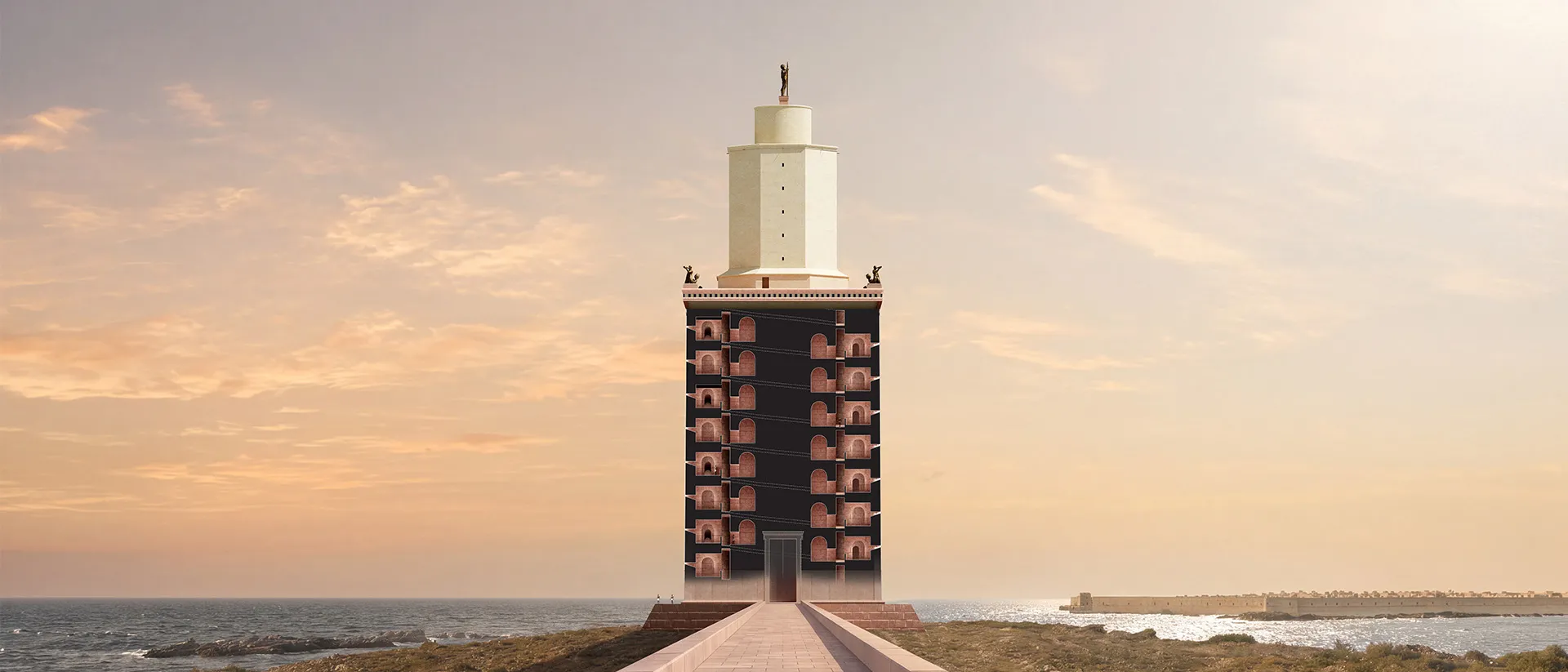
Built in the early 3rd century BCE by Ptolemy I and inaugurated by his son, Ptolemy II, this exceptional tower was intended to guide sailors as they approached a low-lying and dangerous coastline. Standing 103 meters tall, the Lighthouse of Alexandria made the Egyptian city shine as the hub of Mediterranean trade routes. Erected on the island of Pharos, a symbol of the city’s power and the prestige of its builders, it can be considered humanity’s first skyscraper.
Its technical perfection and architectural genius – the embodiment of the scientific pinnacle of its era – enabled the monument to endure through the centuries. It withstood the passage of time, 18 earthquakes, and the upheavals of history for approximately 16 centuries, before its ruins eventually disappeared.
The final mysteries of this architectural marvel have now been unraveled, thanks to research conducted by the Centre d’Études Alexandrines, CEAlex (CNRS/Institut Français d’Archéologie Orientale), under the scientific direction of CNRS archaeologist and architect Isabelle Hairy, and with the support of La Fondation Dassault Systèmes and GEDEON Programmes.
Working for 30 years on the underwater excavation of the Lighthouse of Lighthouses, the first skyscraper in human history, has been a blessing! With the Pharos project, we can begin to shed light on this highly sophisticated structure, built at the entrance to Alexandria on the Mediterranean.

An Extraordinary Scientific Investigation
Since Jean-Yves Empereur launched the first underwater archaeological excavation in 1995, the CEAlex has continued its research at the site of the Lighthouse of Alexandria, now considered the world largest site of submerged architecture. To date, 4,896 stone blocks have been cataloged at depths ranging from 4 to 9 meters in the Mediterranean Sea, covering an area of approximately 2 hectares.The scientists' research reveals the scope of an architectural complex that remains largely unknown.
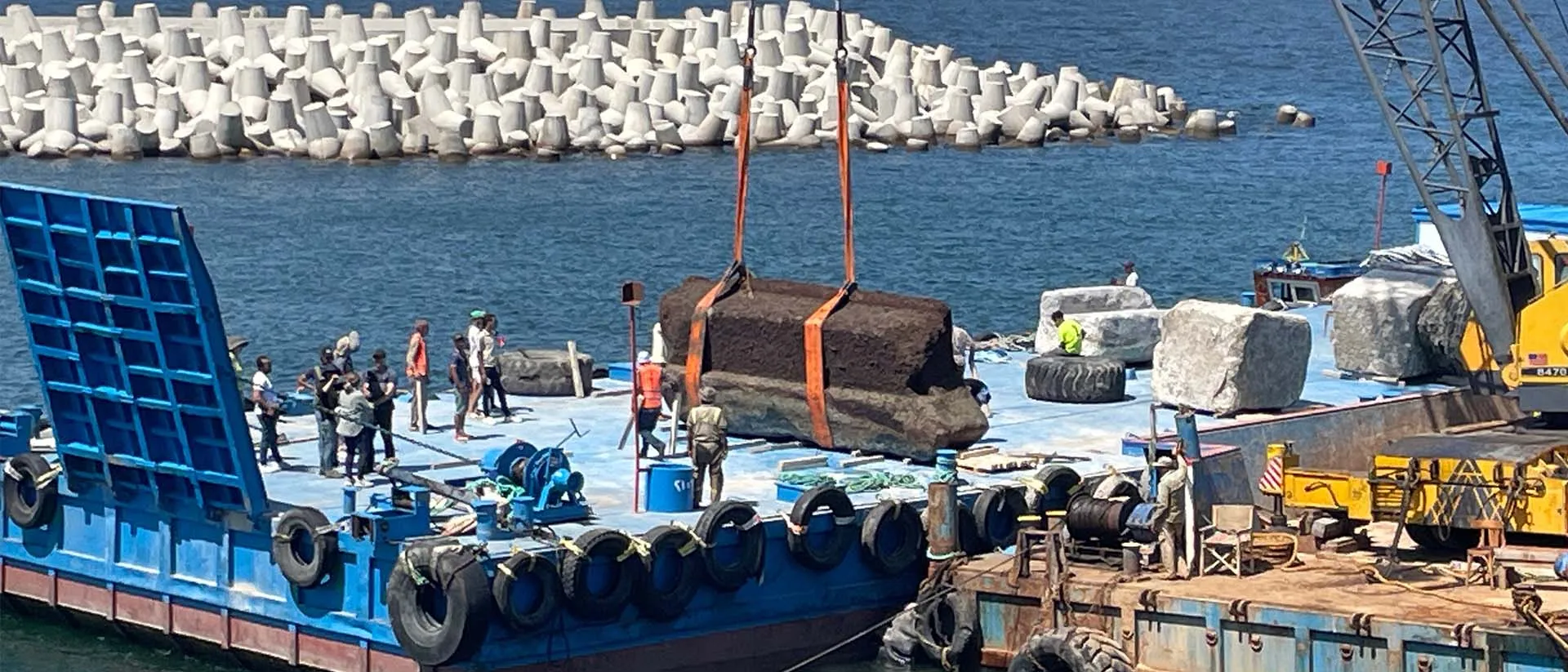
In June 2025, a new, unprecedented excavation campaign enabled the CEAlex teams to reach a decisive milestone and recover the lighthouse most imposing blocks from the Port of Alexandria's waters, including, the lintel and jambs of the monumental gate (weighing between 70 and 80 tons), its threshold, large foundation slabs weighing up to 40 tons, elements of the base borrowed from the pyramids of the Egyptian Old Kingdom as well as pieces from a previously unknown monument: an Egyptian-style pylon incorporating a Greek technique.
This excavation campaign has provided scientific evidence that enhances our understanding of the site, while opening up new avenues of research into the architectural choices of the time and the technical influences that made the construction of these large-scale structures possible.
The Pharos Project: Revealing The Lighthouse of Alexandria Through Digital Twins
However, the architectural reconstruction of the Lighthouse could not rely solely on archaeological data. In fact, the underwater site represents only 10% of the original structure, leaving vast gaps.
Faced with this lack of documentation, a multidisciplinary team, brought together as part of the Pharos project, undertook a scientific investigation aimed at cataloging all sources describing the monument. The investigation drew on a wealth of ancient iconography (including coins, terracotta lamps, mosaics, and decorated glass) and textual sources, particularly medieval Arabic-language documentation that describes the lighthouse’s architecture with remarkable precision. From then on, every piece of data, whether material or documentary, served as a clue to reconstruct, piece by piece, the Seventh Wonder of the World.
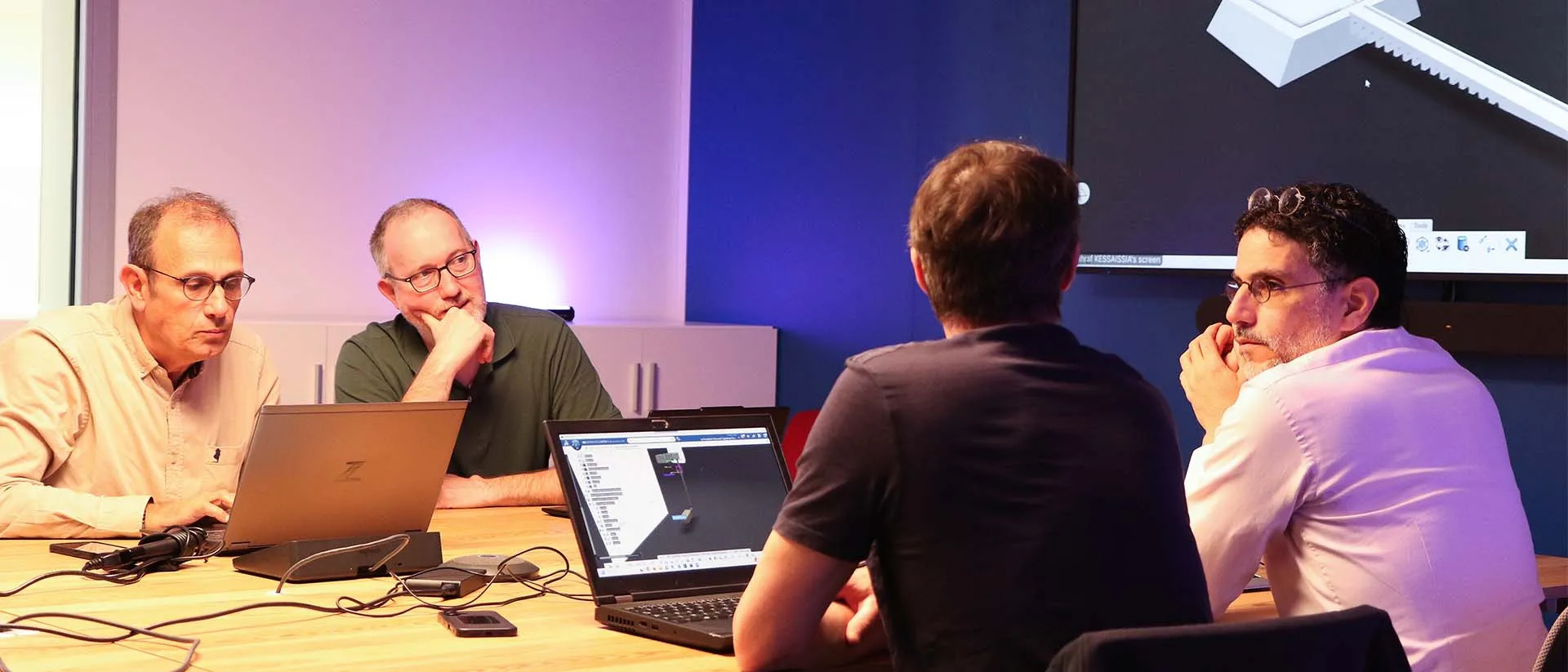
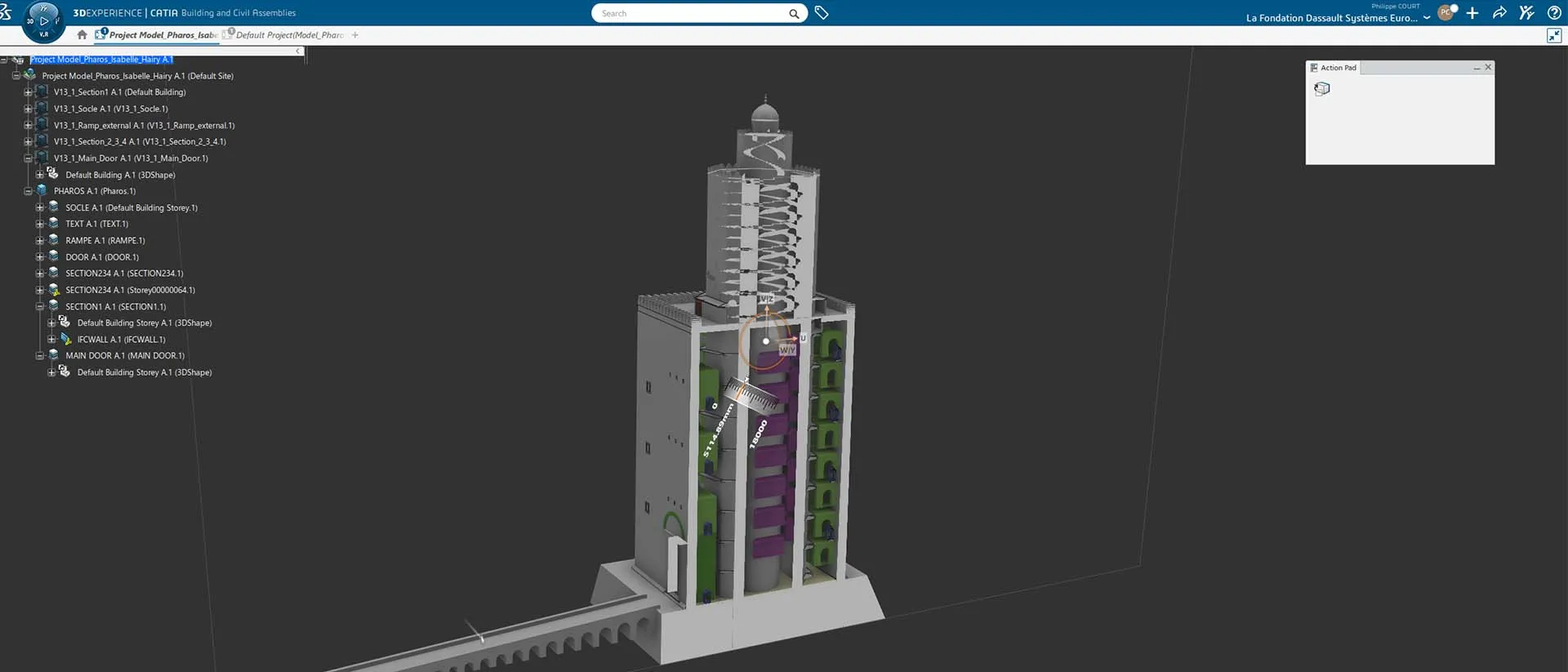
The main challenge of this investigation is to understand how this 103-meter structure was built. To answer this question, CNRS scientist, Isabelle Hairy, and volunteer engineers from La Fondation Dassault Systèmes pooled their expertise to tackle an unprecedented challenge: recreating a digital twin of the legendary Lighthouse of Alexandria. To do so, the teams cross-referenced and analyzed all available data. Each piece of information was incorporated into a digital 3D model, and every hypothesis tested until a complete reconstruction was achieved, established, and refined by comparing results.
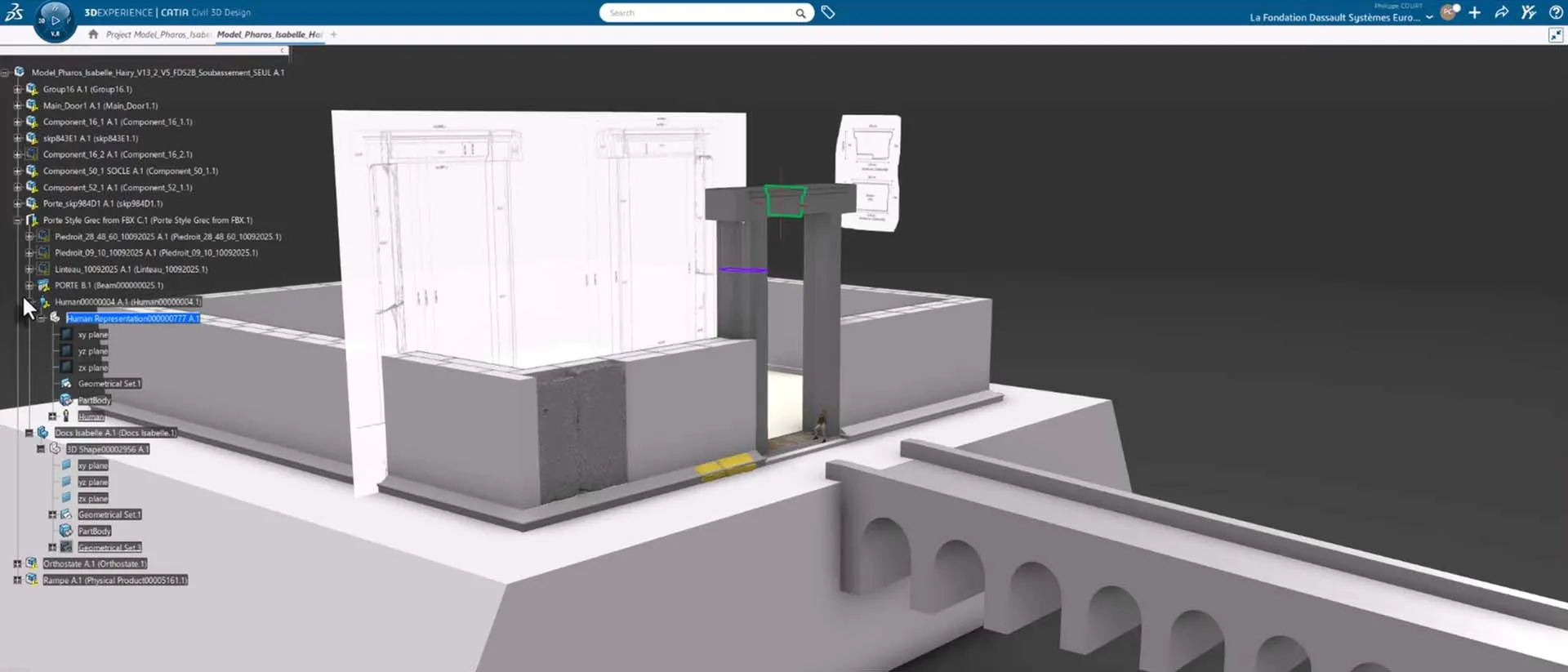

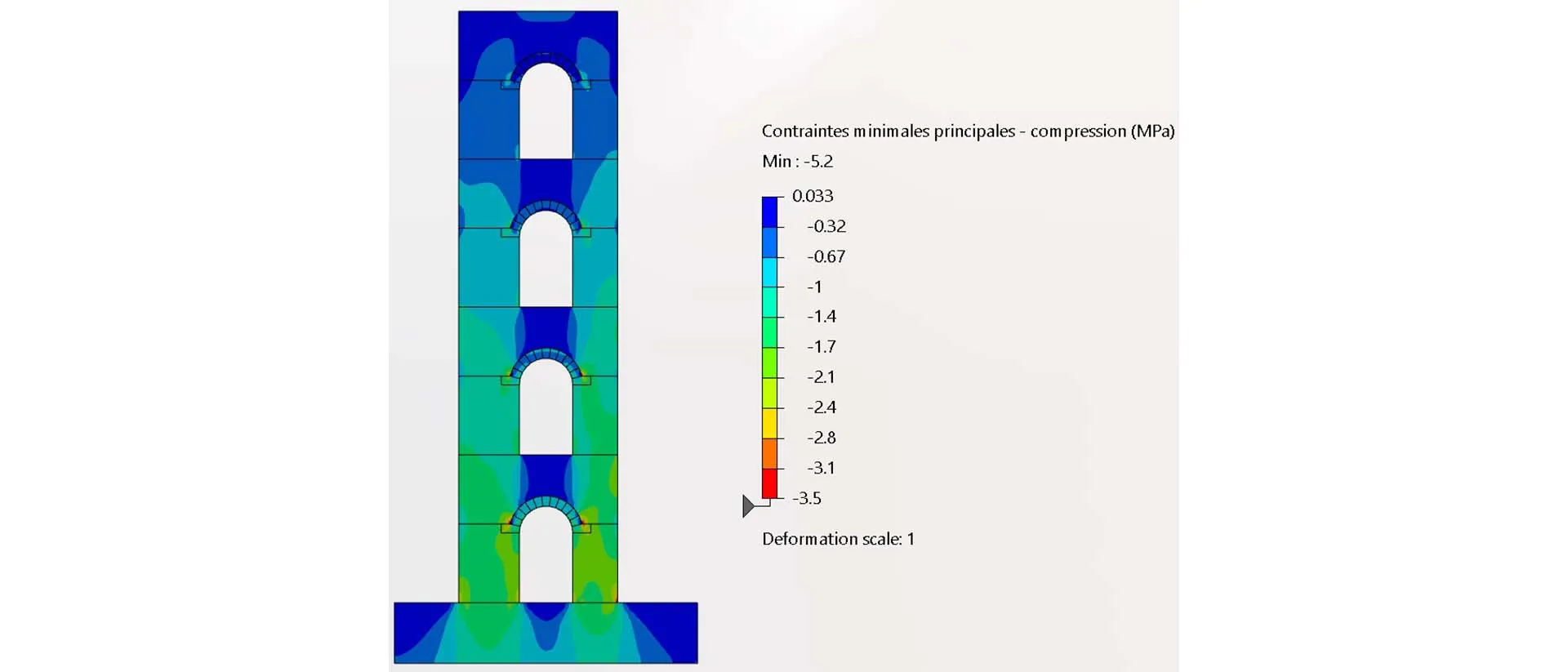
This digital model is also used to validate the mechanical strength of the lighthouse and its structure in the face of the enormous stresses imposed, in particular, by earthquakes. Studies based on equivalent intensities have shed light on the lighthouse’s ability to withstand the test of time over 16 centuries.
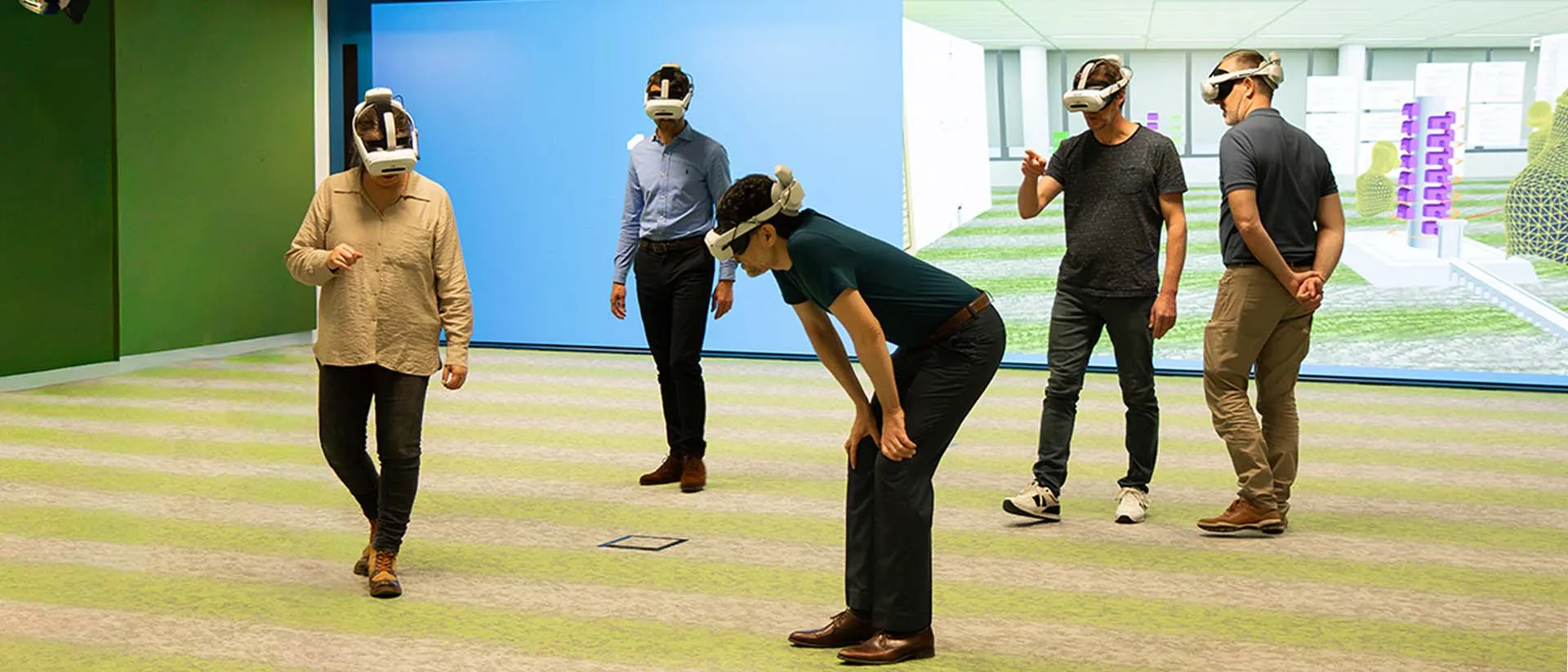
Furthermore, thanks to the Teleport 1/1, designed by Dassault Systèmes and which provides an immersive space for collaborating on digital representations and physically stepping into a full-scale virtual model, that the architect-archaeologist and the engineers were able to compare their analyses. They explored the monument’s volumes and refined the reconstruction, step by step. The use of 3D technology making it possible to scientifically test every architectural decision.
The Lighthouse of Alexandria was a masterpiece of civil engineering that withstood 18 earthquakes. It was this technical feat that led La Fondation Dassault Systèmes to commit to this project. The digital twin and 3D simulations designed by Isabelle Hairy and our engineers participating as skill-based volunteers have provided a better understanding of how this monument was designed and have given it a second life by enabling virtual exploration tours.

An Architecture Brought Back to Life
For the first time, a validated image of the structure is taking shape, offering a new perspective on the Lighthouse of Alexandria. The reconstruction has made it possible to highlight the following features in particular:
- Exterior: a rising causeway supported by 16 arches; a monumental entrance gate rising to a height of 13 meters, and a complex structured into three distinct volumes, their dimensions harmoniously proportioned to one another, resting on a solid base.
- Inside: a labyrinthine internal structure comprising 67 rooms spread across 9 levels, accessed by a ramp wide enough for two horsemen to pass each other; a second route through the interconnected rooms, made possible by staircases situated on a secondary level; a structure based on the superimposition of arcades and large vaulted rooms, revealing an unexpected modernity in engineering.
An Ambitious Documentary Project
This groundbreaking scientific investigation is the subject of a 90-minute documentary produced exclusively by GEDEON Programmes and directed by Laurence Thiriat, which will air on November 5, 2026, as part of France 5’s “Science grand format” series, and later on France.tv, and internationally.
The 2030 Agenda for Sustainable Development
Adopted by all United Nations member states, the 2030 Agenda for Sustainable Development provides a shared blueprint for peace and prosperity for people and the planet, now and into the future. At its heart are the 17 Sustainable Development Goals (SDGs), which are an urgent call for action by all countries - developed and developing - in a global partnership. La Fondation Dassault Systèmes supports the Pharos project in meeting two of these goals: Sustainable Cities and Communities and Partnerships for the Goals.

About our Partner
Centre d’Études Alexandrines (CEAlex)
The Centre d’Études Alexandrines (CEAlex) is a French public research laboratory, one of the 37 units of the Institut National des Sciences Humaines et Sociales, present throughout the world, outside France. It is classified as a Service and Research Unit under the supervision of the Centre National de la Recherche Scientifique (National Center for Scientific Research) and Institut Français d’Archéologie Orientale (French Institute of Oriental Archaeology) and receives ongoing support from the French Ministry of European and Foreign Affairs. It has more than 80 permanent staff, both European and Egyptian, and welcomes 200 visiting scholars a year. The CEAlex was founded by Jean-Yves Empereur in 1990 and directed by him until 2015. In 2020, it celebrated 30 years of permanent presence and continuous work in Alexandria.
The mission of the CEAlex is to study the history of the city of Alexandria and its region over the long term. Its teams carry out archaeological excavations on land and underwater, as well as surveys of the city and countryside, and conduct programs for the study and promotion of modern heritage. The CEAlex works in close cooperation with a wide range of Egyptian stakeholders, first and foremost the Ministry of Antiquities and the University of Alexandria.