Polar Aurora Virtual Lab: Exploring Space Weather Through Virtual Twins
The Polar Aurora Virtual Laboratory is a powerful research and education tool to explore the complex physics generated by solar activity
Exploring the Physics Behind Auroras, Understanding Space Weather
Driven by the dynamic activity of the Sun, space weather plays a critical yet often invisible role in our daily lives. Solar storms release vast amounts of energy and streams of plasma that travel through space and interact with Earth’s magnetic field. These interactions can disrupt satellites, power grids, navigation systems, and communications, making space weather a major scientific and societal challenge that we must better understand and anticipate in an increasingly connected and technology-dependent world.
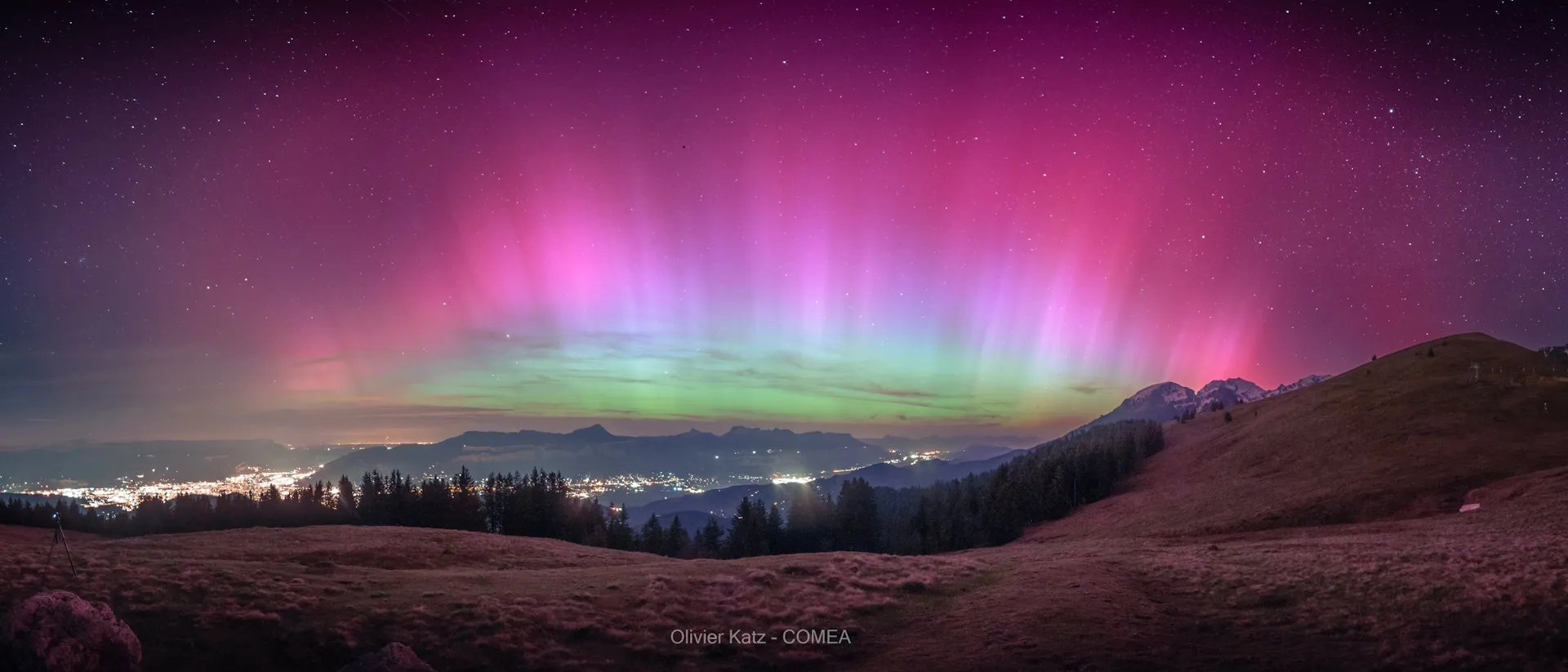
One of the most visible and captivating manifestations of solar activity is the polar aurora. Behind this beautiful natural spectacle lies a complex interplay of plasma physics, electromagnetism, and atmospheric dynamics across multiple scales of time and space.
From a Physical Experiment to a Virtual Laboratory
Driven by a passion for scientific outreach, Jean Lilensten, Research Director at the CNRS (the French National Center for Scientific Research) Institut de Planétologie et d’Astrophysique de Grenoble (IPAG) and a pioneer in space weather, has dedicated his career to making these complex phenomena accessible to a broader audience. Together with the team at AurorAlpes, a non-profit organization based in Grenoble, France, he has continuously worked to bridge advanced research and public understanding, transforming the way auroras are explored and explained.
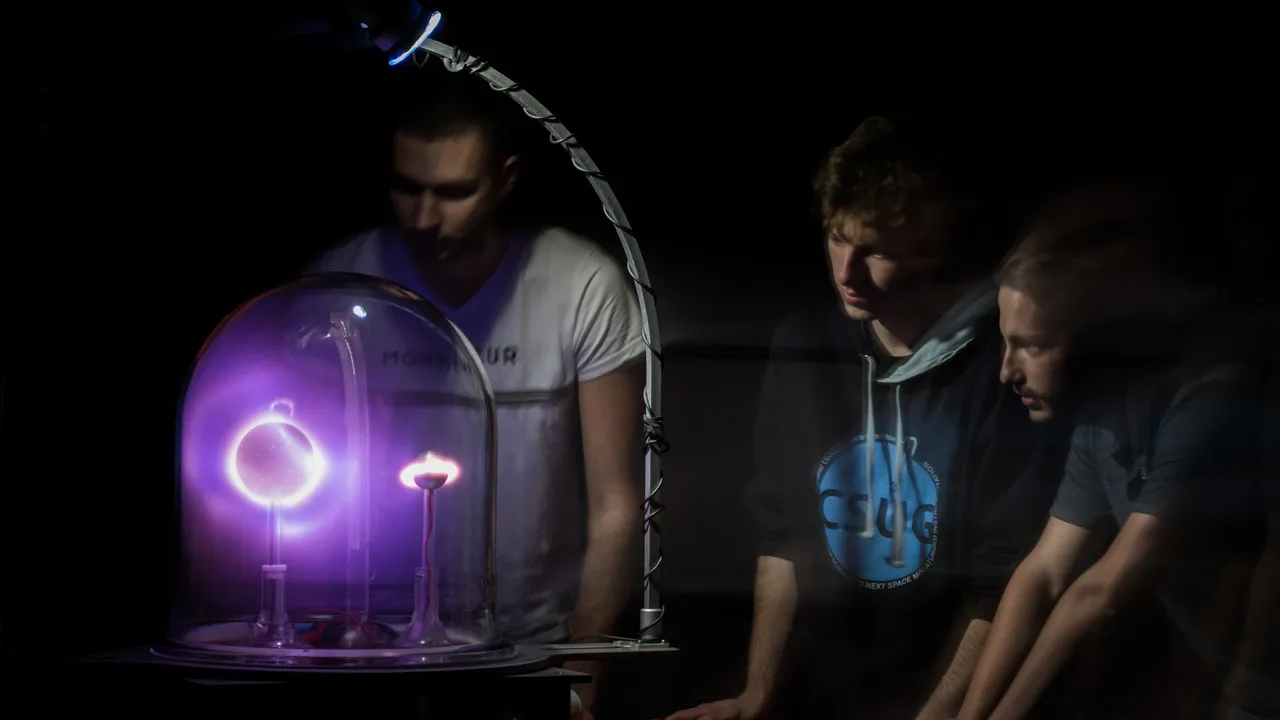
At the heart of this effort is the Planeterrella, an experimental device he designed to recreate polar auroras in miniature under controlled conditions. Inspired by the historic Terrella experiment developed in the early 20th century by Norwegian physicist Kristian Birkeland, this simulator enables scientists, students, and the public to observe and better understand how these complex physics phenomena occur. Building on this foundation, the project aims to raise space weather awareness for a global audience through intuitive, immersive, and interactive learning experiences.
A Virtual Twin for Real Discovery
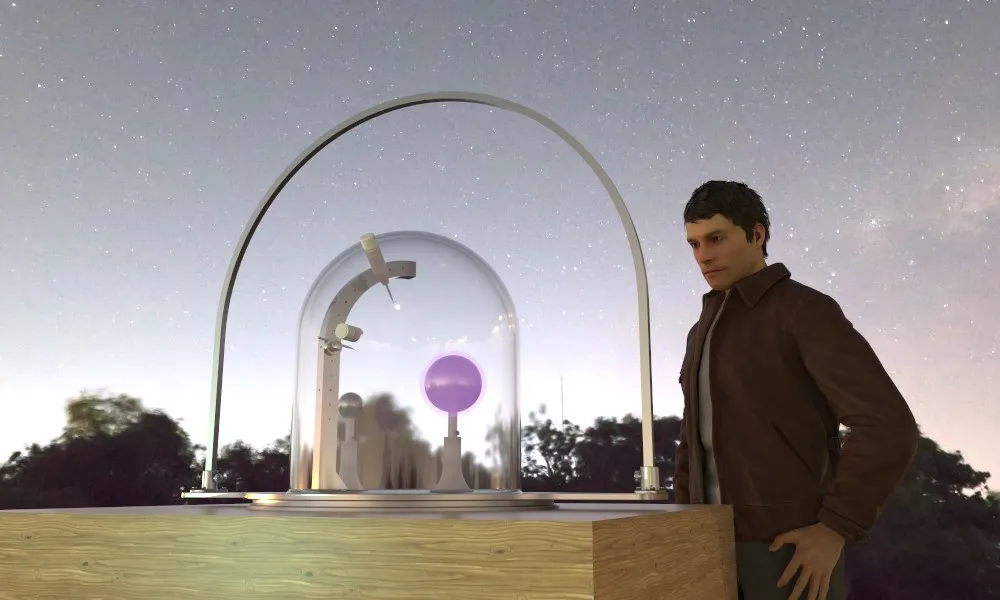
Simulating auroras at a planetary scale would require a level of computing power that current tools cannot yet provide.To overcome the limitations of large-scale simulation, the project therefore shifts perspective by focusing on smaller, reproducible auroral systems. With the support of La Fondation Dassault Systèmes, and thanks to the expertise of its volunteers in 3D technologies and electromagnetic simulation, a virtual twin of the Planeterrella was developed.
This effort led to the creation of the first-ever virtual laboratory of polar auroras, powering the first 3D simulations of plasma behavior from a transient up to a steady state regime to study the plasma instabilities that occur in the formation of polar auroras. By making invisible phenomena tangible and interactive, this virtual laboratory transforms a complex scientific system into a scalable and accessible tool for research and education.
New Perspectives for Science and Education
The project is redefining how science can be taught, experienced, and explored. It introduces an immersive approach to learning, enabling higher education students around the world to actively engage with disciplines such as electromagnetism, plasma physics, spectroscopy, and theoretical physics. Instead of abstract concepts, learners will be able to experiment, visualize, and interact with complex phenomena in a dynamic environment.
For researchers, the virtual laboratory opens new investigative pathways by enabling the study of particle dynamics, magnetic field interactions, and even auroral phenomena on other planets. More broadly, plasma science, central to this project, drives innovation in fields such as healthcare where it is used to improve wound healing and combat resistant bacteria; energy, particularly in the development of thermonuclear fusion; space exploration through more efficient ion propulsion systems; and industry, especially in semiconductor manufacturing. By facilitating access to these phenomena, the project accelerates interdisciplinary research and opens the way to future technological breakthroughs.
The physical Planeterrella has already been deployed worldwide in universities, laboratories, and museums, inspiring diverse audiences. However, its installation and operation require specific technical and pedagogical expertise, limiting its large-scale dissemination. To address this challenge, La Fondation Dassault Systèmes volunteers also developed an interactive 3D assembly guide, enabling institutions to install, operate, and maintain the device more easily while preserving its scientific integrity.
By combining physical experimentation with virtual simulation, and through the commitment of its volunteers, the Foundation is helping scale access to scientific knowledge. This initiative creates a bridge between cutting-edge research and global education, where the beauty of auroras becomes a powerful gateway to understanding the forces shaping our technological world and inspiring future generations.
The 2030 Agenda for Sustainable Development
Adopted by all United Nations member states, the 2030 Agenda for Sustainable Development provides a shared blueprint for peace and prosperity for people and the planet, now and into the future. At its heart are the 17 Sustainable Development Goals (SDGs), which are an urgent call for action by all countries - developed and developing - in a global partnership. La Fondation Dassault Systèmes supports the Polar Aurora Virtual Laboratory project in meeting three of these goals: Quality Education, Industry, Innovation and Infrastructure, and Partnerships for the Goals.


About our Partner
AurorAlpes
AurorAlpes is a nonprofit organization based in Grenoble, France. Its mission is to raise awareness of atmospheric and space phenomena, with a particular focus on polar auroras, while promoting scientific outreach to the general public, teachers, and students. Since its creation, AurorAlpes has been dedicated to showcasing the beauty and science of auroras through immersive experiences that allow audiences to observe realistic representations of these natural phenomena and better understand how they occur.
In 2023, the CNRS - the French National Center for Scientific Research - entrusted AurorAlpes with the Planeterrella experiment, marking the first-ever technology transfer from the CNRS to a non-profit organization. AurorAlpes is now responsible for the development, improvement, and dissemination of this unique tool, which plays a key role in raising awareness about space weather and its challenges.